Engineered Obsolescence: The Hidden Cost of Modern Headlight Assembly Design
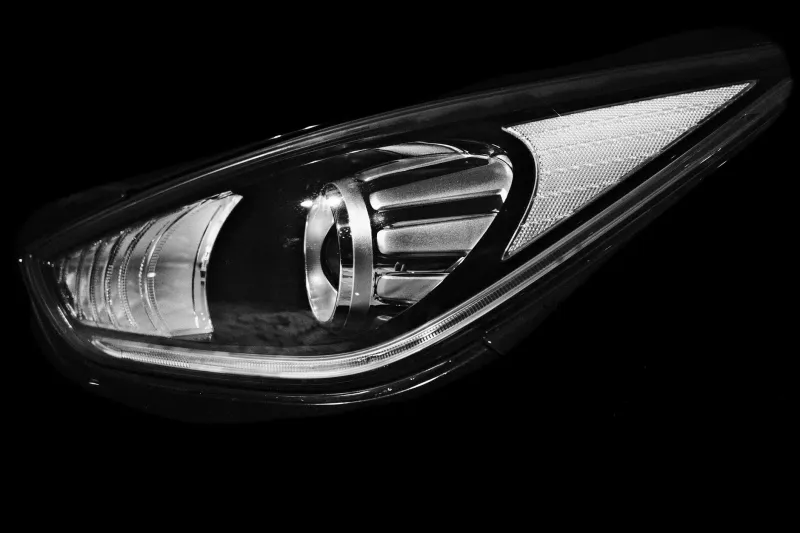
Not long ago, replacing a headlight bulb was a five-minute task requiring no tools and minimal mechanical aptitude. Pull into a parts store, purchase a $12 halogen bulb, swap it in the parking lot, and drive home. That era is effectively over for a significant and growing segment of the American vehicle fleet. Modern headlight design has transformed what was once a routine consumable replacement into a repair event that can exceed $1,000 per side — a shift that benefits automakers and their dealer networks considerably more than it benefits the drivers paying the bills.
The Architecture of the Problem
The transition from replaceable halogen bulbs to integrated LED and High-Intensity Discharge (HID) systems represents a genuine technological advancement in road illumination. LED headlights consume less power, produce superior light output, and have theoretical lifespans measured in decades. In isolation, these are meaningful improvements.
The problem is not the technology itself — it is the packaging philosophy that has accompanied it. A growing number of vehicle manufacturers design their headlight systems as fully sealed assemblies in which the light source, the driver circuitry, the housing, and the lens are permanently bonded together. When any single element fails — whether that is an LED array, a ballast, or a projector lens that has yellowed — the manufacturer's intended resolution is replacement of the entire assembly.
On a mainstream sedan, a single OEM headlight assembly can carry a dealer list price ranging from $400 to $900. On premium and luxury vehicles, the figure climbs substantially higher. A 2019 BMW 5 Series, for example, can require assemblies priced above $2,000 per side at dealer cost. A single failure event, on a vehicle that may have been purchased used for $25,000, suddenly represents a repair cost approaching ten percent of the vehicle's market value.
Why Sealed Assemblies Became the Industry Standard
Automakers and their supplier partners offer several justifications for sealed assembly design. Thermal management is a legitimate consideration — LED systems generate heat in concentrated areas, and sealed housings can be engineered to dissipate that heat in controlled ways. Optical precision is another argument: complex projector and reflector geometries require exact alignment between the light source and the housing, which manufacturers contend is difficult to maintain through field servicing.
These arguments have merit at the engineering level. What they do not fully explain is why the sealing methodology must preclude all field service, rather than allowing access to driver circuits or LED modules while maintaining optical alignment. Independent engineers and right-to-repair advocates have noted that serviceable designs are technically achievable — they simply require more upfront engineering investment and, critically, they reduce the revenue generated by replacement part sales over a vehicle's lifetime.
The economic incentive structure here is worth examining plainly. Sealed assemblies create a recurring, high-value replacement parts revenue stream. They also direct that revenue toward OEM channels, since the complexity of the assemblies historically made aftermarket alternatives difficult to produce at competitive price points.
The Aftermarket Response and Its Limitations
The aftermarket parts industry has responded to sealed assembly pricing with increasing sophistication. Quality aftermarket headlight assemblies are now available for a wide range of popular vehicles at price points 40 to 70 percent below OEM dealer pricing. For a Honda CR-V or a Toyota Camry, this difference can represent $200 to $400 in savings per assembly — meaningful money for the average American household.
However, the aftermarket headlight category requires careful navigation. The same market that offers legitimate, well-engineered alternatives also contains a substantial volume of low-quality assemblies characterized by inferior UV-resistant coatings (leading to premature yellowing), imprecise optical geometry (resulting in substandard beam patterns), and inadequate moisture sealing (creating condensation issues that accelerate LED failure).
For consumers evaluating aftermarket options, several quality indicators deserve attention. Assemblies manufactured to DOT compliance standards and carrying SAE certification markings have met minimum safety benchmarks. Housing materials should specify polycarbonate with UV stabilization. Warranty terms — specifically the length and what failure modes they cover — provide a useful proxy for manufacturer confidence in the product.
Fitment precision also matters more for headlight assemblies than for many other parts categories. An assembly that does not seat correctly against the vehicle's mounting points will produce uneven gaps, moisture infiltration risk, and beam misalignment. Sourcing from suppliers that maintain detailed fitment databases and offer vehicle-specific part validation reduces this risk considerably.
The Right-to-Repair Dimension
Headlight repairability has become a notable topic within the broader right-to-repair movement, which has gained legislative traction in multiple U.S. states over the past several years. While automotive right-to-repair advocacy has historically focused on diagnostic data access, the sealed assembly issue represents a parallel concern: the deliberate engineering of vehicles in ways that restrict consumer repair options and concentrate service revenue within manufacturer-controlled channels.
Several class action lawsuits have been filed in U.S. federal courts targeting specific automakers over sealed headlight design, alleging that the non-serviceable architecture constitutes an unfair business practice. These cases remain in various stages of litigation, and their ultimate outcomes are uncertain. What they do reflect is a growing consumer awareness that the cost trajectory of modern vehicle ownership is partly a product of deliberate design choices — not merely technological necessity.
What Drivers Should Know Before the Lights Dim
For owners of vehicles equipped with integrated LED or HID assemblies, a few practical considerations are worth internalizing before a failure occurs.
First, know your assembly type before you need to. Identifying whether your vehicle uses replaceable bulbs, replaceable LED modules, or fully sealed assemblies takes five minutes with your owner's manual and can save significant time and money when a failure occurs. Some vehicles marketed as having "LED headlights" use LED daytime running lights paired with replaceable halogen low-beam bulbs — a detail that substantially changes the repair equation.
Second, inspect lens condition regularly. Severely yellowed or crazed lenses on sealed assemblies indicate UV degradation that will ultimately affect both light output and housing integrity. Addressing this early — either through professional polishing or proactive assembly replacement — is less costly than waiting for an electrical failure.
Third, when replacement becomes necessary, invest time in evaluating aftermarket options from reputable suppliers before defaulting to dealer pricing. The quality gap between the best aftermarket assemblies and OEM units has narrowed considerably, and the price difference remains substantial.
Modern headlight technology represents a genuine improvement in road safety. The business model layered on top of that technology is a separate matter — one that informed, proactive vehicle owners are increasingly equipped to navigate on their own terms.