The EV Parts Revolution: Why the Old Supply Chain No Longer Works for Electric Vehicle Owners
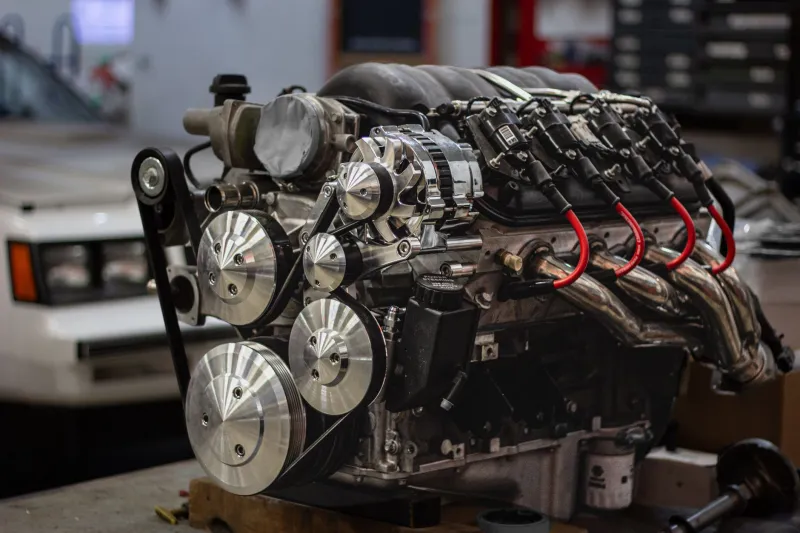
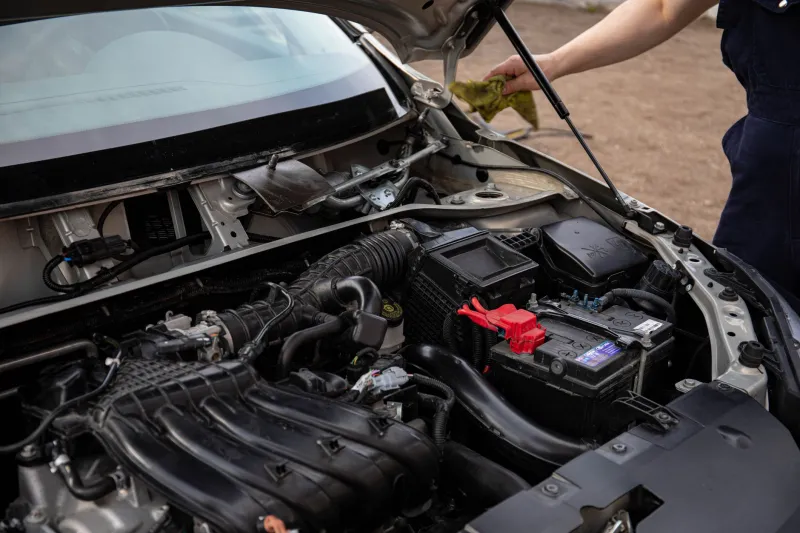
The American automotive parts industry built its infrastructure over more than a century around a remarkably consistent set of assumptions: vehicles have internal combustion engines, those engines require oil, belts, filters, and fuel systems, and the same fundamental service cycle repeats every 30,000 to 100,000 miles. That model served generations of car owners exceptionally well.
Then came the electric vehicle.
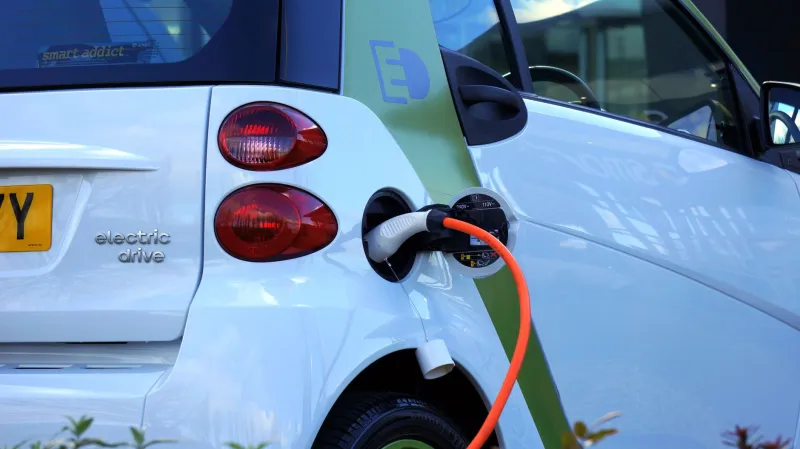
With over 1.5 million EVs now registered across the United States and adoption accelerating in states from California to Florida, a growing segment of vehicle owners is discovering that the parts ecosystem they relied upon for gas-powered cars is ill-equipped to serve them. The frustration is real, the supply gaps are significant, and the solutions—while emerging—remain fragmented. This is an honest examination of where things stand.
Why Traditional Parts Suppliers Are Struggling to Keep Up
The conventional automotive aftermarket was not built for vehicles that eliminate roughly 2,000 moving parts compared to their combustion counterparts. There are no timing chains, no exhaust manifolds, no transmission fluid lines, and no oxygen sensors in a Tesla Model 3 or a Chevy Bolt. That simplicity, often cited as an EV advantage, simultaneously eliminates the high-volume, high-margin product categories that sustain traditional parts suppliers.
What replaces those components, however, is a different category of complexity entirely: battery thermal management systems, regenerative braking assemblies, high-voltage contactors, onboard charging modules, and sophisticated power electronics that most independent repair shops have neither the training nor the tooling to service. The result is a parts market that is simultaneously oversupplied in categories EVs do not need and critically undersupplied in categories they do.
For owners of vehicles like the Ford F-150 Lightning—which has seen remarkably strong adoption among American truck buyers—finding replacement components for the integrated front motor assembly or the ProPower Onboard inverter system outside of Ford's dealer network remains genuinely difficult. This is not a temporary inventory issue. It reflects a structural gap between where EV technology currently sits and where the broader parts market has yet to arrive.
The Components That Demand Specialized Sourcing
Regenerative Braking Components
Perhaps the most misunderstood component category in the EV space is the braking system. While EVs retain conventional hydraulic brakes as a backup and supplemental system, the primary deceleration mechanism in vehicles like the Chevy Bolt EUV and Tesla Model Y is regenerative braking—a process by which the electric motor reverses function to recover kinetic energy and return it to the battery.
This has a profound effect on brake pad wear rates. EV owners typically find that friction brake components last significantly longer than on comparable gas-powered vehicles—sometimes two to three times longer. However, when replacement is necessary, standard brake pads are not always the optimal choice. Some manufacturers have developed low-dust, low-metallic formulations specifically designed for the infrequent but occasionally aggressive friction braking demands of regenerative braking systems. Sourcing these formulations requires moving beyond the standard retail shelf.
Battery Thermal Management Parts
Battery longevity in electric vehicles is directly tied to thermal management—the system of coolant circuits, pumps, heat exchangers, and electronic controls that keep battery cells within their optimal temperature range. In a 2022 Rivian R1T or a Kia EV6, these systems are as mission-critical as the cooling system in a traditional engine.
Components within thermal management systems—including dedicated EV coolant pumps, chiller units, and battery coolant lines—are not interchangeable with conventional automotive cooling parts. The coolant specifications alone differ meaningfully; many EV thermal systems require dielectric coolant formulations that are incompatible with standard antifreeze. Owners who discover this distinction for the first time during an emergency repair face a narrower field of suppliers than they might expect.
High-Voltage System Components
Onboard charger modules, DC-DC converters, and high-voltage contactors represent another category where traditional supply chains simply have no established infrastructure. These components require not only correct part specifications but also technicians certified to work on high-voltage systems—a credential that remains uncommon outside franchised dealerships and a small but growing network of EV-specialized independent shops.
Where EV Owners Are Finding Solutions
The good news is that the market is responding, albeit unevenly. Several avenues are emerging as reliable sources for EV-specific components:
OEM dealer networks remain the most reliable source for high-voltage and battery-adjacent components, though pricing and availability can be limiting factors. For safety-critical systems, this channel is difficult to bypass.
EV-specialized online retailers have proliferated in recent years, with platforms focusing specifically on Tesla, Rivian, and legacy automaker EV lines. These suppliers often carry thermal management components, brake formulations, and charging system parts that general retailers do not stock.
Salvage and remanufacturing networks represent a growing opportunity, particularly for higher-cost components. Battery modules, drive units, and charging hardware from accident-damaged EVs are increasingly being reconditioned and resold through specialized channels—often at substantial savings compared to new OEM pricing.
Community-driven sourcing through model-specific forums and owner communities—particularly within the Tesla and F-150 Lightning owner ecosystems—has proven surprisingly effective for identifying suppliers that have not yet achieved mainstream visibility.
The Industry Must Catch Up—And It Will
The automotive parts industry has navigated transformational shifts before—the transition from carbureted to fuel-injected engines, the proliferation of electronic control systems, the rise of hybrid powertrains. Each transition created temporary supply gaps before the market adapted. The EV transition is larger in scope but follows the same trajectory.
At AutoPartsPro, we recognize that serving the full spectrum of American vehicle owners means expanding beyond the established categories. Our EV component offerings continue to grow as the market matures, with particular focus on thermal management, braking systems, and charging infrastructure components across the most widely adopted electric platforms on U.S. roads.
The parts landscape for electric vehicles is not yet where it needs to be. But for owners willing to source strategically and stay informed, the components they need are increasingly within reach.