The 60,000-Mile Myth: What You Actually Need to Know About Timing Belt Replacement
Few maintenance items generate more confusion — or more conflicting advice — than the timing belt. Ask three different service advisors when yours should be replaced and you may receive three different answers, potentially ranging across 40,000 miles or more. This is not entirely a product of dishonesty, though dishonesty does occasionally play a role. It reflects a genuine complexity in the underlying engineering, compounded by manufacturer schedules that vary considerably across makes and models, and further complicated by the asymmetric consequences of getting the decision wrong.
Getting it wrong in one direction means spending money unnecessarily. Getting it wrong in the other direction can mean a destroyed engine. That asymmetry deserves serious attention.
What the Timing Belt Actually Does
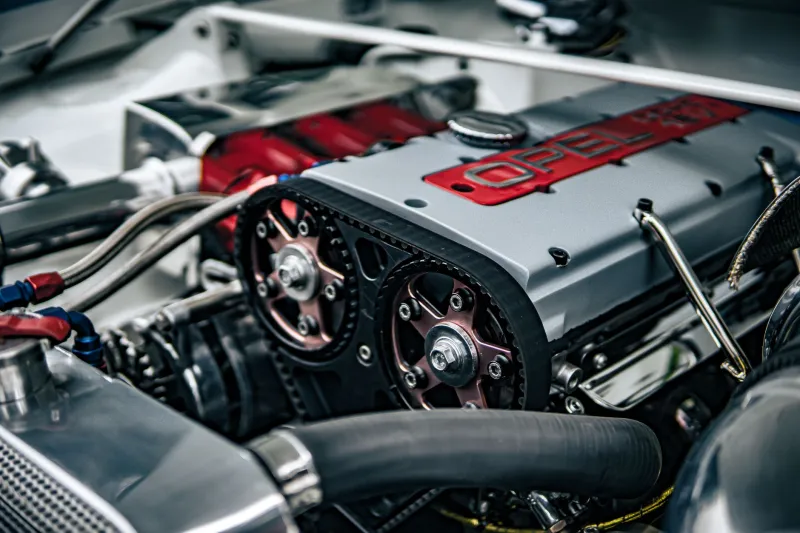
Before evaluating replacement intervals, it is worth establishing why this particular component commands such attention. The timing belt — a reinforced rubber belt with precisely molded teeth — synchronizes the rotation of the crankshaft and the camshaft or camshafts. This synchronization ensures that the engine's intake and exhaust valves open and close in precise coordination with piston movement.
The belt operates in a demanding environment. It runs continuously whenever the engine is running, endures significant tension, and is exposed to heat and, in many applications, oil vapor. Rubber compounds degrade over time and through thermal cycling regardless of mileage. This is why timing belt replacement schedules are expressed in both mileage and time intervals — a belt on a vehicle driven 5,000 miles per year still ages.
Interference vs. Non-Interference: The Most Important Distinction You May Not Know
The single most consequential variable in timing belt decision-making is engine type: interference versus non-interference. Understanding this distinction is not optional — it is the foundation on which every other consideration rests.
In a non-interference engine, the physical geometry of the pistons and valves is designed such that they cannot occupy the same space simultaneously. If the timing belt fails and the engine stops, the pistons and valves simply come to rest without contacting each other. The engine stops running. The driver is stranded. The repair is a new timing belt and, if the vehicle was moving at speed, potentially some related components. It is inconvenient and potentially expensive, but it is not catastrophic.
In an interference engine, the pistons and valves share overlapping space in the cylinder — a design that allows for higher compression ratios and greater efficiency, but which creates a critical dependency on precise timing. When the timing belt fails in an interference engine, the pistons and valves collide. The results range from bent valves requiring head work to complete engine destruction. On a vehicle worth $10,000 to $15,000, an interference engine failure caused by a neglected timing belt can produce a repair estimate that exceeds the vehicle's market value.
A majority of modern engines sold in the United States are interference designs. Honda, Audi, Volkswagen, Subaru, and many Toyota models use interference engines with timing belts or timing chains. Knowing which type your engine is requires approximately two minutes of research with your owner's manual or a reliable parts database — and it is among the most important two minutes you can invest in your vehicle's financial future.
Why Replacement Intervals Vary So Dramatically
Manufacturer-specified timing belt intervals range from approximately 60,000 miles on some older Japanese engines to 150,000 miles on certain European applications. This variation reflects genuine differences in belt material quality, engine operating temperatures, tension system design, and the conservatism built into the manufacturer's engineering margins.
Several factors legitimately influence where a specific vehicle falls within this range:
Belt material and construction. Modern timing belts use HNBR (Hydrogenated Nitrile Butadiene Rubber) or EPDM compounds with fiber reinforcement. Earlier belts used less thermally stable materials that degraded faster. Vehicles with older belt technology carry shorter manufacturer intervals for good reason.
Tensioner and idler pulley design. The belt itself rarely fails in isolation. Hydraulic tensioners and idler pulleys wear concurrently with the belt, and a failed tensioner can destroy a new belt within miles. Reputable timing belt kits include these components as a set — replacing the belt alone while leaving worn tensioners in place is a false economy that many experienced technicians refuse to perform.
Coolant pump integration. On many applications, the coolant pump is driven by the timing belt. When it is, replacing the coolant pump at the same time as the belt is standard practice. The incremental labor cost is minimal since the belt must be removed regardless, and a coolant pump failure shortly after a timing belt job can require reopening the entire assembly.
Operating conditions. Vehicles operated primarily in extreme heat, those with histories of overheating events, or those that have spent extended periods sitting unused all face accelerated belt degradation relative to their mileage-based service intervals.
Recognizing Pressure for Unnecessary Early Replacement
Some service providers recommend timing belt replacement at intervals significantly shorter than the manufacturer's specification — occasionally as early as 60,000 miles on vehicles whose manufacturers specify 105,000. In most cases, this recommendation is not fraudulent; it reflects the advisor's genuine conservatism given the consequences of belt failure. In some cases, however, it reflects an awareness that the job is lucrative and that customers are unlikely to question it.
The appropriate response to an early replacement recommendation is straightforward: request the manufacturer's specified interval in writing, and ask the service advisor to document why deviation from that interval is warranted in your specific case. Legitimate answers include evidence of belt wear observed during inspection, a history of overheating, or documented operating conditions that justify a shortened interval. "We recommend it for safety" without specific supporting evidence is not a sufficient justification for a $500 to $1,200 service.
Recognizing Dismissal of a Legitimate Concern
The opposite failure mode also occurs. Some service advisors — particularly at shops less familiar with specific makes — may be unaware of a vehicle's interference engine status or may underestimate the urgency of a belt that is approaching or past its service interval. Owners of vehicles like the Honda Accord, Acura TL, or Subaru Legacy who are told that timing belt service "can wait a few more months" when the interval has already been exceeded should treat that advice skeptically.
For interference engine applications past their manufacturer interval, the question is not whether to replace the belt — it is how quickly to schedule the service.
A Decision Framework for Timing Belt Service
The following approach provides a rational basis for timing belt decisions:
- Confirm your engine type. Interference or non-interference? This determines the consequence profile of a failure.
- Identify the manufacturer's interval. Both mileage and time components. Your owner's manual is the primary source; a reputable parts database is a reliable secondary source.
- Assess your vehicle's history. Has the belt been replaced previously? Are records available? A vehicle purchased used without service records should be treated as if the belt has never been replaced.
- Evaluate component condition. If your vehicle is within 20,000 miles of the recommended interval, scheduling inspection and planning for replacement is prudent. Past the interval, replacement is overdue.
- Specify a complete kit. When replacement is warranted, insist on a kit that includes the belt, tensioner, idler pulleys, and, where applicable, the coolant pump. The labor cost of this service is the same whether performed with a $45 belt-only part or a $180 complete kit. The risk profile is not.
The timing belt is not an area where false economy serves any driver's interests. It is also not an area where manufactured urgency should go unchallenged. Armed with accurate information about your specific engine and its manufacturer specifications, you are well-positioned to make this decision rationally — and to recognize when the advice you are receiving does not align with the facts.