Transmission Fluid: Separating Dealership Upsells from Legitimate Maintenance Science
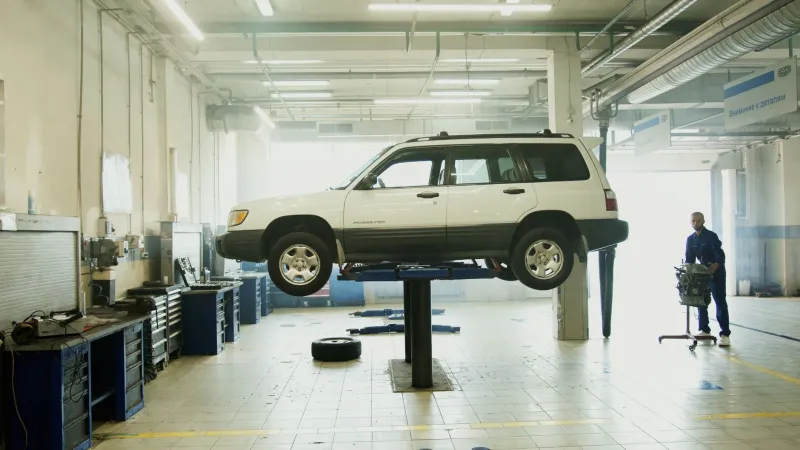
Walk into nearly any dealership service department in America, and there is a reasonable chance a service advisor will recommend a transmission fluid flush — often citing a 30,000-mile interval with a confidence that implies universal consensus. The problem is that no such consensus exists among engineers, manufacturers, or independent automotive researchers. What does exist is a significant financial incentive for service departments to perform this procedure as frequently as possible.
This is not an accusation of widespread fraud. Transmission fluid does degrade, and service does matter. The more important question — one that dealerships rarely pause to answer carefully — is when that service actually matters, and for which vehicles it is genuinely necessary at aggressive intervals.
How Transmission Fluid Actually Deteriorates
Transmission fluid serves multiple functions simultaneously: it lubricates moving components, cools the transmission, facilitates hydraulic pressure in automatic systems, and in many modern designs, it directly influences shift quality through its viscosity and friction characteristics. Over time, heat cycling, oxidation, and the accumulation of metallic particles from normal wear cause the fluid to break down.
The rate of that breakdown, however, is not uniform across vehicle types, driving conditions, or transmission designs. A heavy-duty pickup truck used for towing in the Arizona summer heat places dramatically different thermal demands on its transmission than a sedan commuting moderate distances in the Pacific Northwest. Treating both vehicles with an identical 30,000-mile flush schedule is not precision maintenance — it is a one-size-fits-all approach that happens to generate consistent service revenue.
What Manufacturers Actually Specify
Owner's manuals tell a more nuanced story. Many modern passenger vehicles from manufacturers including Toyota, Honda, and several domestic brands specify transmission fluid service intervals ranging from 60,000 to 100,000 miles under normal driving conditions. Some manufacturers have engineered their transmissions with fluid formulations intended to last the lifetime of the vehicle under standard use — a claim that prompts skepticism from some independent mechanics but is nonetheless the manufacturer's stated position.
Critically, most manufacturers distinguish between normal and severe service conditions. Severe conditions typically include frequent towing, stop-and-go city driving, operation in extreme temperatures, or consistent use in hilly or mountainous terrain. If your driving profile qualifies as severe, more frequent fluid attention may be entirely warranted. If it does not, the 30,000-mile recommendation your service advisor offers may have more to do with shop revenue targets than your vehicle's engineering requirements.
The practical recommendation: locate your owner's manual and read the transmission maintenance section directly. If the manual is unavailable, the manufacturer's official website typically publishes maintenance schedules. That document — not a laminated service menu — should anchor your maintenance decisions.
The Flush Versus Drain-and-Fill Distinction
Another layer of complexity involves the procedure itself. A transmission flush uses a machine to force new fluid through the system, purging nearly all of the old fluid. A drain-and-fill removes only the fluid accessible through the drain plug, typically replacing 40 to 60 percent of total fluid volume. Dealerships frequently recommend flushes because they cost more and, in some cases, because the equipment represents a capital investment that needs to justify itself.
However, some transmission engineers and independent specialists caution that high-pressure flushing on transmissions with significant wear can dislodge accumulated debris in ways that cause immediate operational problems. This is not a universal risk, but it is a documented phenomenon — particularly in older transmissions that have not received regular fluid attention. In those situations, a drain-and-fill with fresh fluid of the correct specification may be the more conservative and appropriate choice.
The fluid specification matters enormously here. Modern transmissions, particularly continuously variable transmissions (CVTs) and dual-clutch automatics, require fluids engineered to very precise friction and viscosity standards. Using a generic or incorrect fluid — regardless of the service interval — can cause shift quality issues, accelerated wear, or outright mechanical failure. Always verify that any fluid used in your transmission meets the exact specification listed in your owner's manual.
CVTs and Dual-Clutch Transmissions: A Different Calculus
The 30,000-mile flush recommendation is particularly problematic when applied indiscriminately to CVTs and dual-clutch transmissions, which have become increasingly common across the US vehicle market. These transmissions are mechanically distinct from traditional torque-converter automatics and often have stricter fluid requirements.
CVTs, which rely on a belt-and-pulley system rather than conventional gears, are highly sensitive to fluid condition. Several manufacturers — Nissan being a frequently cited example — have faced well-documented reliability concerns partly attributable to fluid degradation in their CVT-equipped models. In these cases, more proactive fluid maintenance than the owner's manual suggests may actually be defensible. Independent mechanics who specialize in these transmissions often recommend service intervals shorter than the factory specification, particularly for high-mileage vehicles.
Dual-clutch transmissions present their own considerations. The wet-clutch variants, which are bathed in fluid, require periodic fluid attention. Dry-clutch designs typically do not. Knowing which type your vehicle uses is fundamental before accepting any service recommendation.
The Financial Reality of Unnecessary Service
A transmission flush at a dealership commonly runs between $150 and $300, depending on the vehicle and geographic market. If a driver follows a 30,000-mile flush schedule on a vehicle whose manufacturer specifies 60,000-mile intervals, they are paying for approximately twice as many services as the engineering data supports. Over the course of vehicle ownership, that difference compounds into several hundred dollars of unnecessary expenditure.
The counterargument — that more frequent fluid changes provide additional protection — carries some intuitive appeal but limited empirical support for most driving conditions. Fresh fluid does perform better than degraded fluid, but the marginal benefit of changing fluid that still falls within specification is difficult to quantify and unlikely to justify the cost in normal driving circumstances.
A Practical Framework for Transmission Fluid Decisions
Rather than defaulting to whatever a service advisor recommends or dismissing fluid maintenance entirely, consider the following approach:
Consult the owner's manual first. The manufacturer's maintenance schedule is the baseline. Understand what interval is specified and whether your driving conditions qualify as severe.
Assess your actual driving profile honestly. Frequent towing, extreme climates, or predominantly city driving may justify more proactive maintenance than the standard schedule suggests.
Understand your transmission type. CVTs and dual-clutch transmissions may warrant different intervals and stricter fluid specifications than conventional automatics.
Request a fluid condition assessment before authorizing service. Many shops can evaluate fluid color, smell, and contamination level. If the fluid still appears serviceable, declining or deferring the service is a reasonable choice.
Source quality fluid through reputable suppliers. Whether your dealer or an independent shop performs the service, verifying that the fluid meets your manufacturer's exact specification is non-negotiable. At AutoPartsPro, we carry transmission fluids across all major specifications, allowing vehicle owners to confirm they are getting the correct formulation for their application.
Transmission maintenance is a legitimate and important part of vehicle ownership. The goal of this analysis is not to encourage neglect — it is to encourage precision. The data, the engineering, and the manufacturer specifications all point toward the same conclusion: informed, condition-based maintenance outperforms rigid, arbitrary service intervals every time.