Suspension Neglect: The Hidden Threat Quietly Draining Your Safety and Your Savings
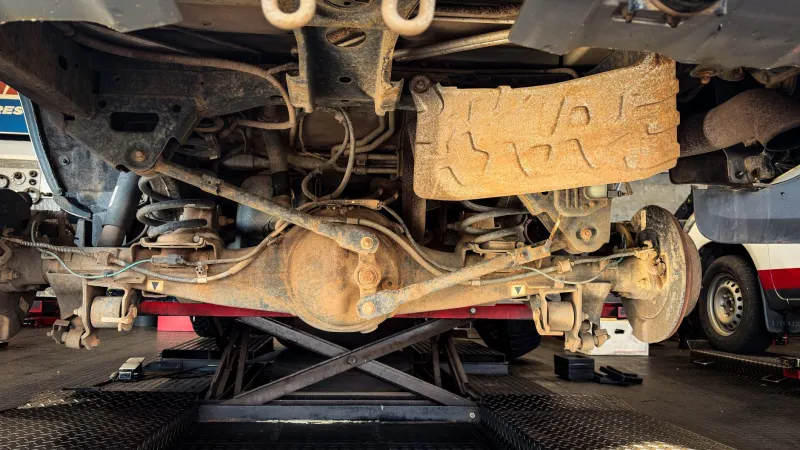
Ask most American drivers when they last changed their oil, and they'll answer without hesitation. Ask when they last had their suspension inspected, and you'll typically be met with a puzzled look. This knowledge gap isn't entirely the driver's fault—suspension wear is gradual, subtle, and easy to rationalize away as "just how the car feels now." But that quiet deterioration carries consequences far more serious than a rough commute.
At AutoPartsPro, we see this pattern repeatedly: customers arrive searching for a single replacement component only to discover that months of deferred suspension maintenance have turned a straightforward repair into a multi-part overhaul. The purpose of this article is to change that outcome for you.
Why Suspension Gets Ignored
Unlike a dead battery or a check engine light, suspension degradation rarely announces itself dramatically. A shock absorber doesn't fail overnight the way a serpentine belt snaps. Instead, it loses damping efficiency incrementally—10 percent this month, another 15 percent by spring. The driver's nervous system adapts to the gradual change, recalibrating what feels "normal" until the vehicle is handling at a fraction of its designed capability.
Maintenance schedules published in owner's manuals compound the problem. Many manufacturers list suspension inspection intervals in vague terms or omit specific mileage benchmarks entirely, leaving drivers without a concrete trigger to act. Compare that to the near-universal 5,000-mile oil change reminder, and it becomes clear why suspension sits at the bottom of most maintenance priority lists.
Road conditions across much of the United States accelerate the issue further. Pothole-laden urban streets in cities like Chicago, Detroit, and New York place extraordinary stress on suspension geometry. Even drivers in sunbelt states face challenges—extreme heat degrades rubber bushings and seals faster than manufacturers' test cycles anticipate.
The Components Most Likely to Fail First
A vehicle's suspension system is an interconnected network, but certain components tend to reach their service limits before others:
Shock Absorbers and Struts — These are the workhorses of ride control. Once a shock absorber loses more than roughly 50 percent of its damping force, stopping distances can increase by up to 10 feet at highway speeds—a figure that has ended countless accidents in the wrong direction. Struts on modern unibody vehicles also serve a structural role, meaning their failure affects alignment, tire wear, and steering precision simultaneously.
Ball Joints — These spherical bearings connect the control arms to the steering knuckles. A worn ball joint introduces play into the steering system and, in severe cases, can separate entirely—causing sudden, catastrophic loss of vehicle control. This is not a hypothetical; ball joint failures are documented contributors to rollover accidents in SUVs and trucks.
Control Arm Bushings — Rubber or polyurethane bushings isolate the control arms from the vehicle's frame, absorbing vibration and maintaining precise wheel alignment. As they degrade, alignment geometry shifts, causing accelerated and uneven tire wear that drivers mistakenly attribute to improper inflation.
Tie Rod Ends — These components translate steering wheel input into actual wheel movement. Worn tie rod ends create vague, imprecise steering and, like ball joints, can fail in ways that leave a driver with little directional control.
Sway Bar Links and Bushings — Often the cheapest components on the list, sway bar links are also among the most frequently neglected. Their failure allows excessive body roll during cornering, destabilizing the vehicle in emergency maneuvers.
Warning Signs Drivers Routinely Dismiss
The suspension system communicates its distress in several ways that are easy to misinterpret or ignore:
- Pulling to one side during braking or cruising is frequently blamed on tire pressure, but misalignment caused by worn suspension components is an equally common culprit.
- Clunking or knocking sounds over bumps, railroad crossings, or uneven pavement often indicate worn bushings, loose ball joints, or failing struts.
- Excessive nose-dive during braking and rear squat during acceleration are textbook signs of shock absorber fatigue.
- Uneven tire wear patterns—cupping, scalloping, or feathering—frequently trace back to suspension geometry problems rather than wheel balance alone.
- A steering wheel that vibrates at certain speeds may suggest worn tie rod ends rather than a simple wheel balancing issue.
Each of these symptoms is commonly attributed to something less serious. That misattribution delays the repair and allows the underlying damage to compound.
The Cascade Effect: How One Worn Part Damages Everything Around It
Perhaps the most financially consequential aspect of suspension neglect is the damage propagation it causes. A worn shock absorber that goes unaddressed doesn't simply continue to perform poorly—it allows excessive wheel movement that accelerates tire wear, stresses wheel bearings, and places abnormal loads on ball joints and control arm bushings.
Consider a concrete example: a driver ignores a clunking front strut for six months. By the time the strut is replaced, the technician discovers that the associated spring has also fatigued, the top mount bearing has collapsed, and the front tires have developed irregular wear that has shortened their remaining service life by 15,000 miles. A $250 strut replacement has become a $900 repair—and that figure doesn't account for the tires.
This cascade is not unusual. It is, in fact, the standard outcome of deferred suspension maintenance.
Why DIY Diagnosis Often Misses the Mark
Suspension inspection requires more than a visual check from the driveway. Many worn components show no visible damage—a ball joint with dangerous play may look identical to a new one without the application of specific load tests. Proper inspection involves lifting the vehicle, applying measured force to components, and checking for movement that exceeds manufacturer specifications.
Without a lift and the appropriate tools, a well-intentioned home inspection can produce false confidence. Drivers convince themselves that because nothing looks broken, nothing is broken—a conclusion that doesn't account for the internal degradation occurring inside sealed components.
This is not an argument against DIY maintenance broadly. It is an argument for knowing the boundaries of what a driveway inspection can and cannot reveal, and for scheduling periodic professional suspension checks—particularly after 50,000 miles or any significant impact event.
Treating Suspension Maintenance as an Investment
The financial framing around suspension maintenance is often backwards. Drivers view replacement parts as an expense to be deferred. The more accurate view is that timely suspension replacement is an investment that protects significantly more expensive downstream components—tires, wheel bearings, alignment, and in worst-case scenarios, the structural integrity of the vehicle itself.
Quality replacement shocks, struts, and associated hardware from reputable manufacturers are available at competitive price points. Completing axle pairs simultaneously—replacing both front struts rather than one—is standard practice that ensures balanced handling and avoids the asymmetric wear patterns that develop when one side is new and the other is not.
At AutoPartsPro, our catalog spans every major make and model on American roads, with fitment verification tools that ensure you receive the correct component the first time. Whether you are sourcing parts for a professional shop or equipping yourself for a garage installation, the right suspension components are available without compromise.
The Bottom Line
Suspension maintenance doesn't carry the cultural visibility of an oil change or a brake job, but its impact on safety and total ownership cost is arguably greater than either. The warning signs exist. The damage cascade is predictable. The solution is straightforward: inspect regularly, replace proactively, and resist the temptation to normalize a ride quality that has quietly become dangerous.
Your vehicle's suspension is the only thing standing between the road's imperfections and your ability to control where you go. It deserves the same disciplined attention you give every other system under the hood.