The Fuel Pump Countdown: Catching a Failing Component Before It Strands You at 70 MPH

The fuel pump occupies a strange position in the American driver's mental map of vehicle maintenance. Unlike brake pads—which squeal audibly when worn—or a dead battery that announces itself on a cold morning, a deteriorating fuel pump tends to fail in increments. Each symptom is easy to rationalize away. Then, one afternoon on an interstate highway, the engine loses power, the car coasts to the shoulder, and the driver realizes they ignored six months of warning signs.
At AutoPartsPro, we track the parts categories that generate the most reactive, emergency-driven purchases—components bought under duress rather than through informed planning. Fuel pumps rank consistently near the top of that list. This article is designed to change that pattern.
Understanding What Your Fuel Pump Actually Does
In most modern vehicles, the fuel pump is an electric unit submerged inside the fuel tank. It draws gasoline or diesel from the tank and delivers it to the fuel injectors at a precise, regulated pressure. The pump operates continuously whenever the engine is running, often cycling at high speeds for hours at a time over the vehicle's service life.
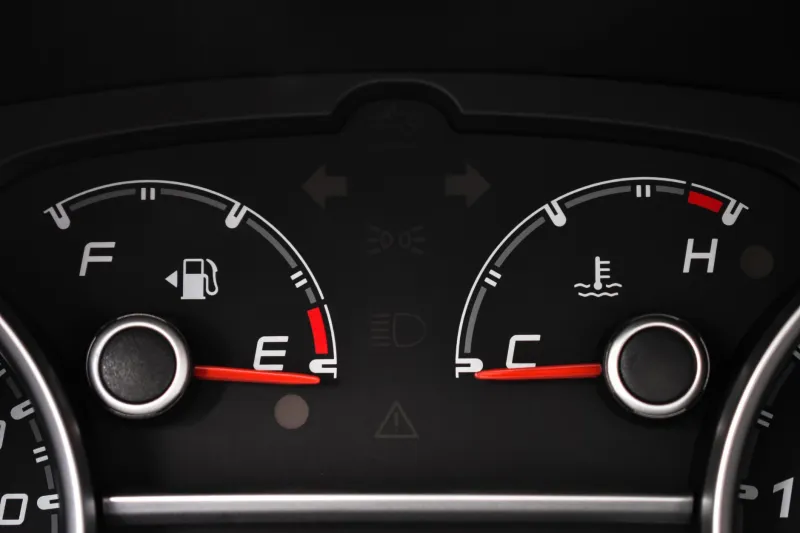
Because the pump sits inside the tank, it relies on the fuel itself for both lubrication and cooling. This has an important practical implication: consistently running your vehicle with a near-empty tank accelerates pump wear. The fuel acts as a thermal buffer; when that buffer is reduced, the pump runs hotter and degrades faster. It is one of the more counterintuitive maintenance facts in automotive care, and one that dealers and service advisors rarely emphasize.
The Six Warning Signs Drivers Routinely Dismiss
Fuel pump failure is rarely instantaneous. The component typically degrades over weeks or months, producing a recognizable progression of symptoms:
Hesitation under acceleration. When you press the accelerator and the engine stumbles before responding, insufficient fuel pressure is one of the first suspects. Many drivers attribute this to "bad gas" or a dirty throttle body and move on without further investigation.
Difficulty starting after the vehicle has sat. A weakening pump may struggle to build adequate pressure after a cold start or after the vehicle has been parked for several hours. If your vehicle cranks longer than usual before firing, particularly in the morning, take note.
Engine sputtering at highway speeds. Sustained high-speed driving demands consistent fuel delivery. A pump operating below specification may maintain adequate pressure at idle but falter under sustained load, producing a characteristic sputtering or surging sensation at 60 to 70 mph.
Unexpected power loss on inclines. Hills impose additional load on the drivetrain and demand higher fuel flow. A marginal pump may perform acceptably on flat roads while failing noticeably when the vehicle climbs.
Whining noise from the fuel tank area. A healthy fuel pump operates with minimal noise. A distinctive high-pitched whine emanating from beneath the rear of the vehicle—where the tank is typically located—is a reliable indicator of internal pump wear.
Sudden stalling and failure to restart. This is the terminal stage. By this point, the pump has lost the capacity to deliver adequate fuel under any conditions. The engine stalls and may not restart without towing and repair.
OEM Versus Aftermarket: Where Quality Differences Are Most Consequential
Fuel pump replacement presents a genuine and meaningful quality spectrum. OEM pumps—manufactured to the specifications of the original vehicle producer—are engineered to deliver precise pressure tolerances, extended service life, and compatibility with the vehicle's fuel management system. They are also priced accordingly, typically ranging from $150 to $400 for the pump assembly alone, depending on the application.
Quality aftermarket fuel pumps from established manufacturers represent a legitimate alternative. Reputable aftermarket suppliers invest in engineering validation and often provide competitive warranties. The critical distinction is between established aftermarket brands and the growing category of counterfeit or ultra-low-cost imports that have become increasingly prevalent on online marketplaces.
Counterfeit fuel pumps are a documented problem in the US market. These units are manufactured with substandard materials, inadequate pressure regulation, and no meaningful quality control. They may fit the vehicle's mounting configuration and appear to function normally for a period of weeks or months before failing—sometimes catastrophically, in ways that can damage fuel injectors or other downstream components. Price is the most reliable indicator: a fuel pump assembly selling for $40 to $60 when comparable quality units cost $150 or more is almost certainly not what it claims to be.
When purchasing a replacement fuel pump, look for units from suppliers who can provide documented testing standards, warranty terms that extend beyond 90 days, and clear country-of-origin information.
The Real Cost Breakdown: DIY Versus Professional Installation
Fuel pump replacement is a moderately complex job that varies significantly in difficulty depending on the vehicle. On some models, the pump is accessible by removing a cover panel beneath the rear seat—a job a competent home mechanic can complete in two to three hours. On others, the fuel tank must be drained and lowered from the vehicle, a procedure that requires specialized equipment and comfort working around flammable materials.
For a straightforward accessible-tank replacement, the DIY cost breakdown typically looks like this:
- Quality replacement pump assembly: $150–$350
- Fuel filter (recommended concurrent replacement): $15–$40
- Miscellaneous seals and connectors: $10–$25
- Total parts cost: $175–$415
Dealership or independent shop labor for the same job ranges from $200 to $600 depending on the vehicle and the shop's hourly rate. On vehicles requiring tank removal, labor alone can exceed $400. The total professional repair bill for a fuel pump replacement commonly falls between $400 and $900.
The economic case for DIY is meaningful on accessible applications. On complex installations, or for drivers without appropriate tools and experience, professional service is the more prudent choice. Either way, addressing the repair proactively—based on symptom recognition—is substantially less expensive than an emergency tow, after-hours repair shop rates, and the ancillary costs of an unplanned breakdown.
Preventative Strategy: Extending Pump Life
Beyond keeping the fuel tank reasonably full, several practices contribute to extended fuel pump service life. Using quality fuel from reputable stations reduces the particulate load on the pump's internal filter screen. Replacing the fuel filter at the manufacturer's recommended interval prevents downstream restriction that forces the pump to work harder than its design specification. And attending promptly to any of the six warning signs described above—rather than dismissing them—keeps a marginal component from becoming a roadside emergency.
The fuel pump is a $400 part that most drivers never consider until they are standing beside a stalled vehicle watching traffic pass. With the right information and a modest investment in attention, it does not have to be.