The Corrosion Misdiagnosis: How a Fifteen-Dollar Fix Gets Billed as a Four-Hundred-Dollar Repair
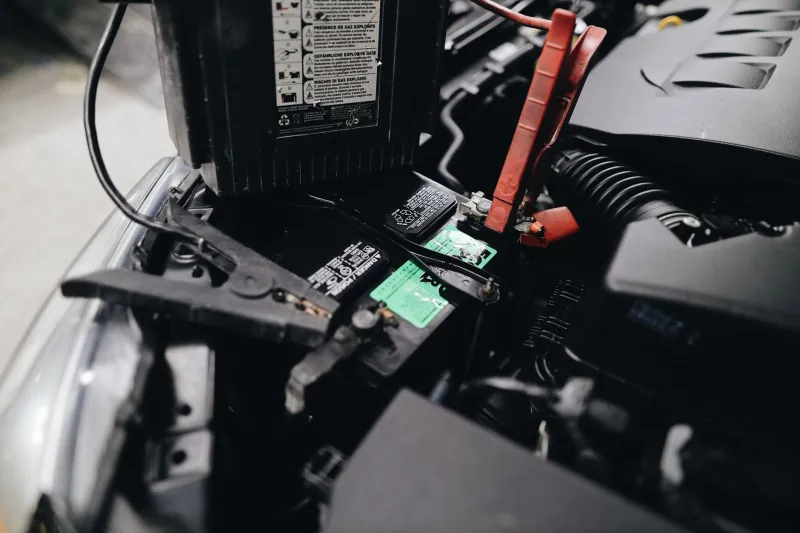
Few automotive problems are as reliably misdiagnosed as a corroded battery terminal. The symptoms it produces — slow cranking, intermittent electrical failures, dashboard warning lights, a vehicle that simply refuses to start — overlap almost perfectly with the symptoms of a dead battery, a failing alternator, or a deteriorating starter motor. Without a thorough inspection of the connection point itself, the diagnostic process frequently skips past the simplest explanation and lands on a far more expensive one.
This is not always the result of negligence. Technicians working under time pressure in high-volume shops often follow diagnostic trees that prioritize component testing over connection inspection. A battery that tests at marginal voltage under load gets replaced. A starter that draws high amperage gets condemned. The corroded terminal sitting between those components and the rest of the electrical system goes unaddressed, and the new parts inherit the same problem.
The Chemistry Behind the Crust
The white, blue-green, or powdery gray substance that accumulates on battery terminals is not simply dirt. It is the physical residue of an electrochemical process that occurs continuously at the junction between dissimilar metals, battery acid vapor, and atmospheric moisture.
Lead-acid batteries — still the dominant technology in conventional American vehicles — vent small amounts of hydrogen gas and sulfuric acid vapor during normal charge and discharge cycles. When that vapor contacts the copper or zinc alloy of a battery terminal clamp, it initiates a corrosion reaction that produces lead sulfate and various copper sulfate compounds depending on the terminal material. The resulting deposits are electrically resistive, meaning they actively impede the flow of current even when the physical connection appears intact.
This resistance is not uniform or predictable. A corroded terminal might pass enough current to start a vehicle on a warm summer morning and fail completely on a cold January night when the battery is already working harder to turn a cold engine. The intermittent nature of the problem is precisely what makes it so easy to misattribute to a failing battery.
Symptoms That Point to the Terminal, Not the Component
Several patterns should raise suspicion that a connection problem, rather than a component failure, is the underlying cause.
Slow or labored cranking that improves after the vehicle has been jump-started and driven — but returns the next cold morning — is a classic indicator. A fully charged battery passing through a resistive connection delivers reduced effective voltage to the starter. Jump-starting bypasses the compromised terminal temporarily, which can create the false impression that the battery accepted and held a charge.
Intermittent electrical gremlins are another signal. Infotainment systems that reset, power windows that operate sluggishly, or dashboard lights that flicker without a corresponding fault code often trace back to voltage fluctuations caused by a poor ground or positive terminal connection. These symptoms are frequently attributed to software glitches or failing body control modules before the terminal is examined.
A voltmeter test across a corroded terminal under load — meaning with the starter engaged — will often reveal a voltage drop of one to two volts or more across the connection itself. Any drop exceeding 0.2 volts at the terminal indicates a resistance problem that warrants immediate attention.
The Inspection Process Every Driver Can Perform
Identifying terminal corrosion requires nothing more sophisticated than a visual inspection and a basic understanding of what to look for. Begin with the engine off and both terminals disconnected — negative first, always.
Examine the terminal clamps and the battery posts themselves. Corrosion on the top of the terminal post, between the post and clamp, or along the cable insulation near the clamp all indicate active degradation. Pay particular attention to the underside of the clamp where it contacts the post — this surface is frequently corroded even when the visible exterior appears relatively clean.
Also inspect the cable ends for green or white discoloration extending up the insulation, which indicates that acid vapor has wicked into the cable strands themselves. A cable with internal corrosion cannot be fully restored by cleaning the terminal alone; it requires replacement.
For the ground circuit specifically, trace the negative cable from the battery terminal to its chassis connection point. This bolt-to-metal contact is a frequent site of corrosion that is almost never inspected during a standard battery service. A corroded chassis ground can produce symptoms indistinguishable from a failing alternator, including battery warning lights and charging system faults.
Cleaning, Replacement, and Prevention
Mild to moderate terminal corrosion can be addressed with a purpose-made terminal cleaning brush, a baking soda and water solution to neutralize acid deposits, and thorough rinsing with clean water before reconnection. The terminal surfaces should be bright metal before the clamp is reinstalled.
However, terminals that are structurally compromised — those with cracks in the clamp body, elongated bolt holes that no longer hold torque, or severe pitting on the contact surface — should be replaced rather than cleaned. Top-post battery terminal replacements are widely available, straightforward to install, and typically cost between eight and fifteen dollars for quality units that include the appropriate hardware.
Dielectric grease applied to the terminal post and clamp after installation creates a barrier that dramatically slows the corrosion process by excluding moisture and acid vapor from the contact area. This is not an optional finishing touch. It is a maintenance step that extends the service life of the connection significantly and is particularly important in coastal regions where salt air accelerates electrochemical degradation.
Felt terminal washers saturated with anti-corrosion compound, placed over the battery post before the clamp is installed, provide an additional layer of protection that costs less than two dollars per battery service.
What to Ask Before Authorizing a Repair
If a shop recommends battery, alternator, or starter replacement without explicitly documenting a terminal inspection and voltage drop test, it is entirely appropriate to ask whether the terminal connection has been evaluated as a potential source of the symptoms. A reputable technician will welcome the question. One who dismisses it may be following a diagnostic shortcut that serves the repair ticket more than it serves the vehicle.
At AutoPartsPro, our catalog includes quality terminal replacement hardware, dielectric grease, anti-corrosion washers, and terminal cleaning tools for every vehicle configuration in our database. Spending fifteen dollars on the connection before condemning a hundred-dollar battery or a four-hundred-dollar alternator is simply sound diagnostic practice — and it is the kind of maintenance that pays for itself the first time it prevents an unnecessary parts replacement.