Built to Outlast the Payment Book: Five Smart Investments for Drivers Chasing 200,000 Miles
Photo: Internet Archive Book Images, No restrictions, via Wikimedia Commons
The average new-car payment in the United States now exceeds $740 a month, which explains why a growing movement of drivers is asking a different question: not "what should I buy next?" but "how do I make this one last?"
The answer, according to mechanics who routinely see 250,000-mile vehicles roll into their bays, is rarely dramatic. High-mileage survivors aren't maintained harder — they're maintained earlier, with a handful of inexpensive components upgraded before failure ever occurs. Here are five that deliver the biggest longevity return per dollar spent.
1. An Auxiliary Transmission Fluid Cooler ($50–$150)
Heat is the silent executioner of automatic transmissions. Fluid that consistently runs above 220°F loses its protective properties rapidly, and every 20-degree increase roughly halves transmission life. Towing, mountain driving, and stop-and-go city traffic all push temperatures into the danger zone.
A supplemental cooler — a small finned radiator mounted in front of the A/C condenser — is one of the highest-value longevity modifications available. DIY difficulty: moderate; it requires splicing into cooler lines, so confident home mechanics only. The payoff: on a truck or SUV that tows, this single upgrade can be the difference between a transmission that dies at 110,000 miles and one that reaches 250,000.
2. Quality Motor Mounts ($80–$250 for parts)
Motor mounts are the unsung heroes of drivetrain longevity. When they degrade — and they all eventually do — the engine rocks under load, stressing exhaust manifolds, wiring harnesses, coolant hoses, and axle boots. What begins as a $150 mount replacement cascades into a $1,500 repair bill when a cracked manifold or severed sensor harness follows.
Aftermarket polyurethane or premium OEM-equivalent mounts outlast the cheap units many shops install by a wide margin. DIY difficulty: varies wildly by engine layout; some are accessible, others require supporting the engine. The payoff: protecting every connected component from vibration damage, often adding years of trouble-free operation.
3. Skid Plates and Underbody Protection ($60–$300)
Rust claims more high-mileage vehicles than mechanical failure, particularly in the Salt Belt states from New York to Colorado. Exposed components — the fuel tank, transmission pan, brake and fuel lines, and on trucks, the transfer case — take constant punishment from road spray, gravel, and corrosion.
Aluminum or steel skid plates shield these vulnerable areas, and on many trucks and crossovers they bolt directly to existing frame holes. DIY difficulty: easy; basic hand tools and an afternoon. The payoff: in rust-belt regions, protecting brake and fuel lines from road debris and salt exposure is a genuine safety investment, not just a longevity one.
4. An Upgraded Battery and Proper Ground Straps ($120–$250)
Modern vehicles are rolling computer networks, and unstable voltage is their kryptonite. A marginal battery or corroded ground strap produces voltage fluctuations that cook alternator regulators, corrupt module software, and prematurely kill sensitive electronics. Technicians consistently report that a surprising share of "electrical gremlins" trace back to a $25 ground cable.
An AGM battery with higher reserve capacity, paired with fresh ground straps and cleaned terminals, stabilizes the entire electrical system. DIY difficulty: easy — this is a 30-minute driveway job. The payoff: protecting a $600 alternator, $1,200 body control module, and every sensor in between.
5. Synthetic Fluids Throughout, Changed Early ($100–$200 per service)
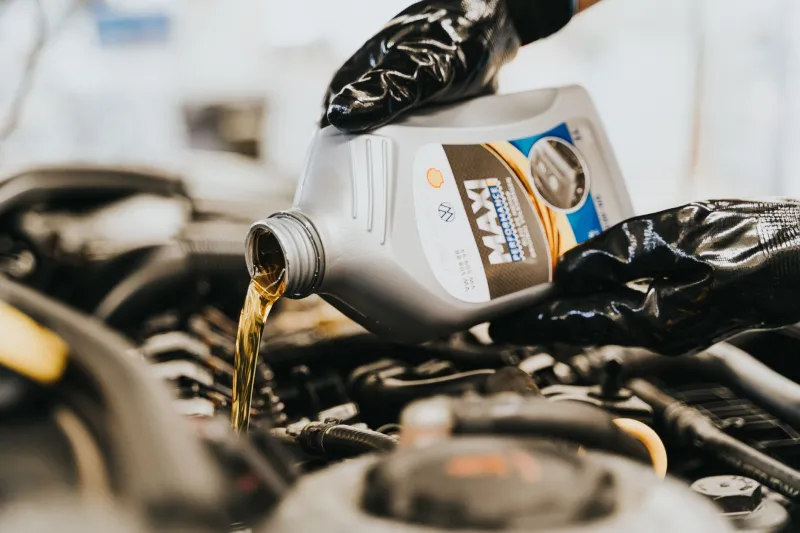
This is the least glamorous entry on the list and arguably the most important. Full synthetic engine oil, synthetic blend gear oil in differentials, and quality transmission fluid — all changed at or before the manufacturer's interval — are the single strongest predictor of six-figure odometers.
The key word is early. The fluids that come out of a vehicle at 60,000 miles tell the story of what its internals will look like at 160,000. DIY difficulty: easy for engine oil, moderate for differentials and transmission. The payoff: reduced wear metals, cooler-running components, and a drivetrain that simply doesn't wear out on schedule.
The Math That Makes It Obvious
Combined, these five upgrades cost roughly $500 to $900 in parts. Against a $740 monthly car payment, that's barely more than one payment's worth of investment to potentially add five or more years of reliable service. For drivers committed to running their vehicle into the ground — or better yet, never running it into the ground at all — few financial decisions in car ownership offer a better return.